
International Roundtable on Geostrategic Shifts and Energy Security in South Asia and the Middle East
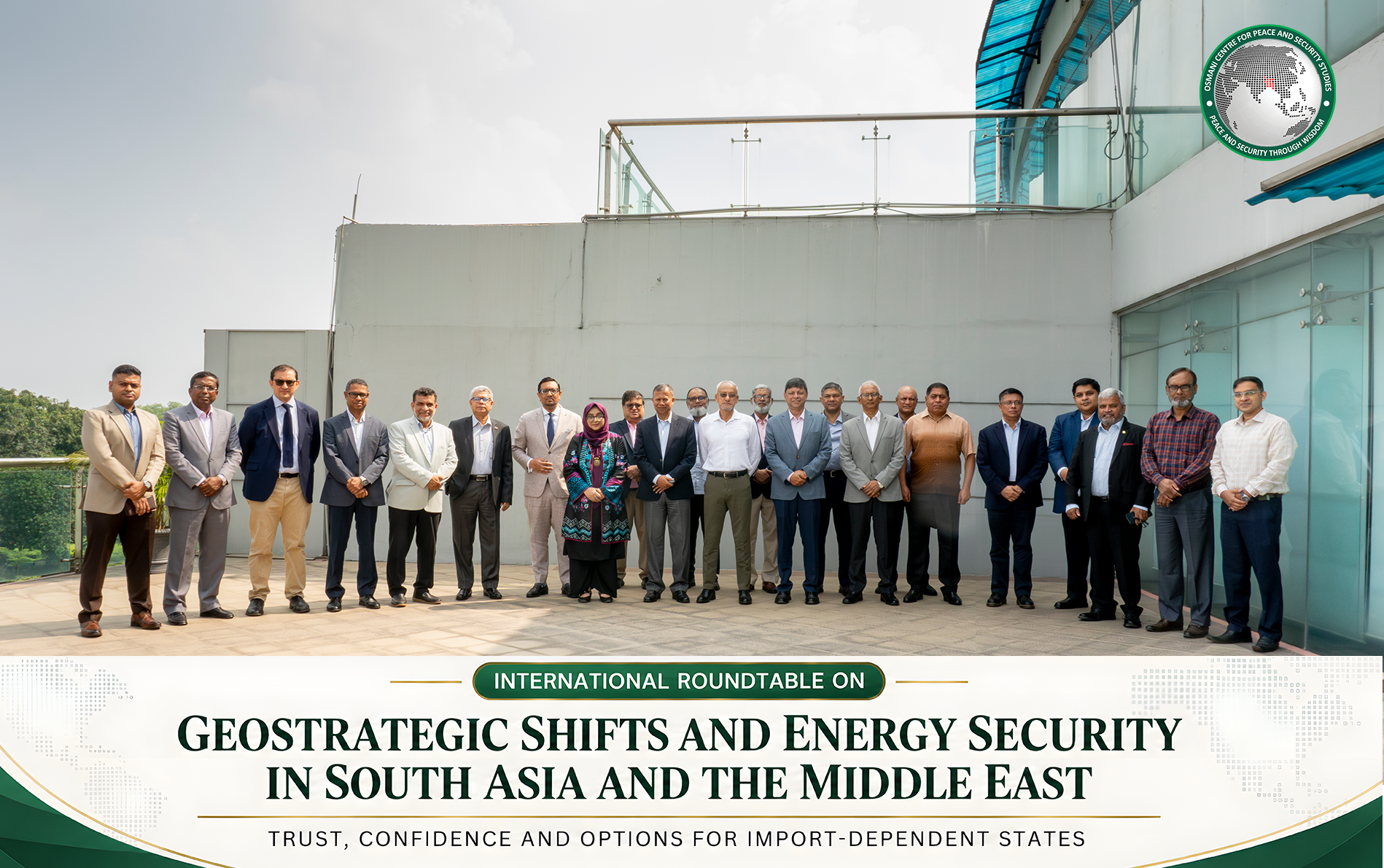
International Roundtable on Geostrategic Shifts and Energy Security in South Asia and the Middle East
The
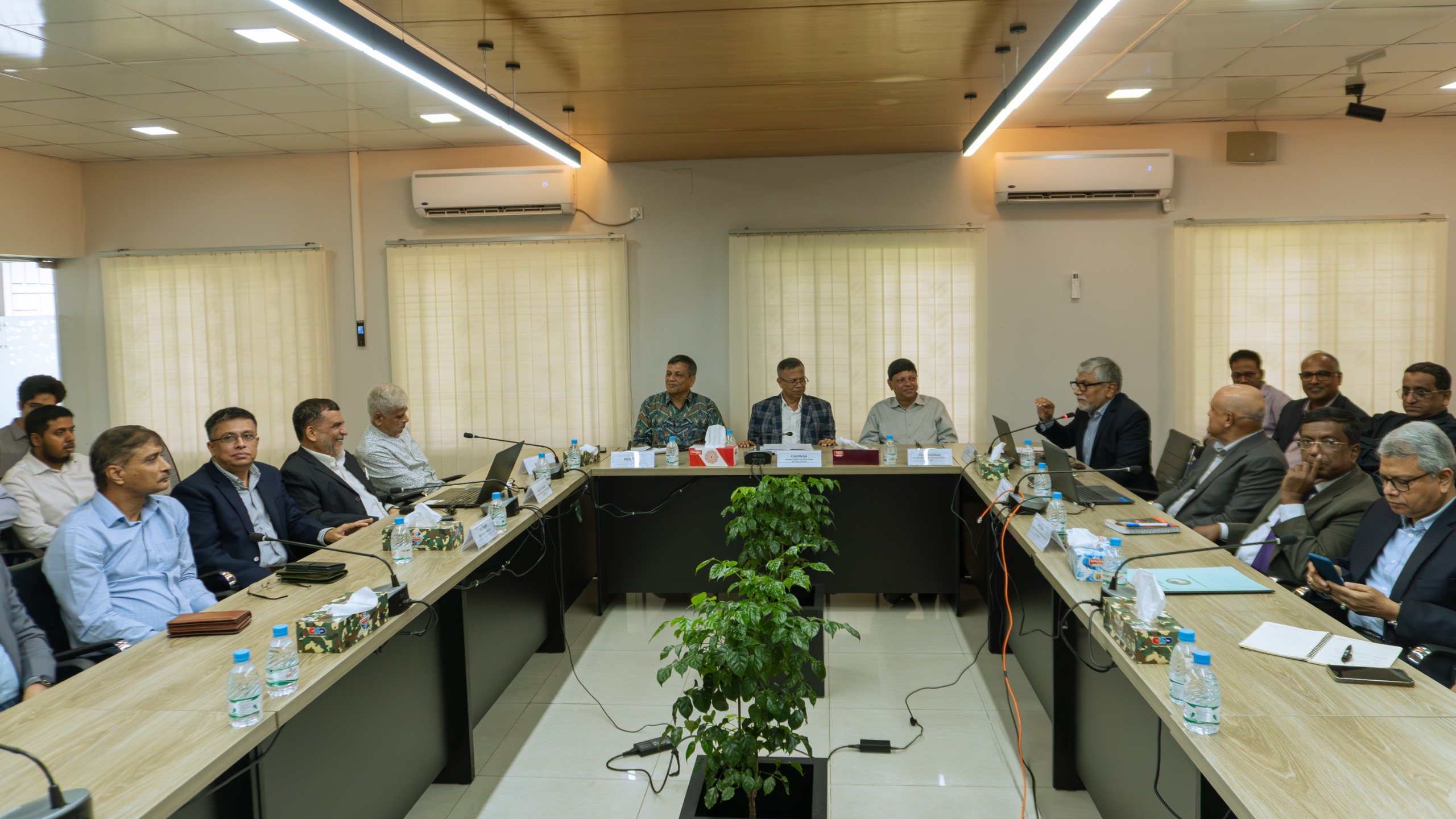
Osmani Centre for Peace and Security Studies (OCPASS) organised an
International Roundtable on “Geostrategic Shifts and Energy Security in South Asia
and the Middle East: Trust, Confidence and Options for Import-Dependent States”
on 3 October 2026 at the Army Golf Club Conference Room, Dhaka.
The
discussion examined how geopolitical realignments, disruptions around critical
energy chokepoints, supply-chain vulnerabilities and changing Gulf-Asian
partnerships are reshaping the energy security environment of South Asia.
Particular attention was given to the experience of 2026, when disruptions to
the Strait of Hormuz and regional LNG infrastructure exposed the
vulnerabilities of import-dependent economies.
1.
In session 1,
Prof. Dr Rashed Uz Zaman from the University of Dhaka talked about ‘Realignment
and the new energy geography.’
2.
In session 2, Prof. Dr Sakib bin
Amin from North South University spoke on ‘Transmission, exposure and
resilience‘
3.
In session 3, Prof. Dr
Shahab Enam Khan from Jahangirnagar University addressed the issue of Collective
standing and policy options.
Three
sessions explored new energy geographies and regional realignment; transmission,
exposure and resilience; and collective standing and policy options.
The
roundtable highlighted the need for Bangladesh and other import-dependent
states to integrate energy, diplomacy and national security planning, while
pursuing diversified supply, stronger contractual confidence, strategic
reserves, regional cooperation and more resilient partnerships with energy
suppliers. The discussions will contribute to policy inputs for the forthcoming
National Security Review.
Key takeaways
· Energy security is increasingly a national security
issue.
· Shared vulnerabilities require issue-specific and
minilateral cooperation.
· Bangladesh needs greater supply diversification and
strategic energy reserves.
· Regional cooperation should strengthen energy corridors,
emergency mechanisms and power trade.
· Bangladesh should move from an energy buyer to a
strategic energy partner.
Participate to this event